
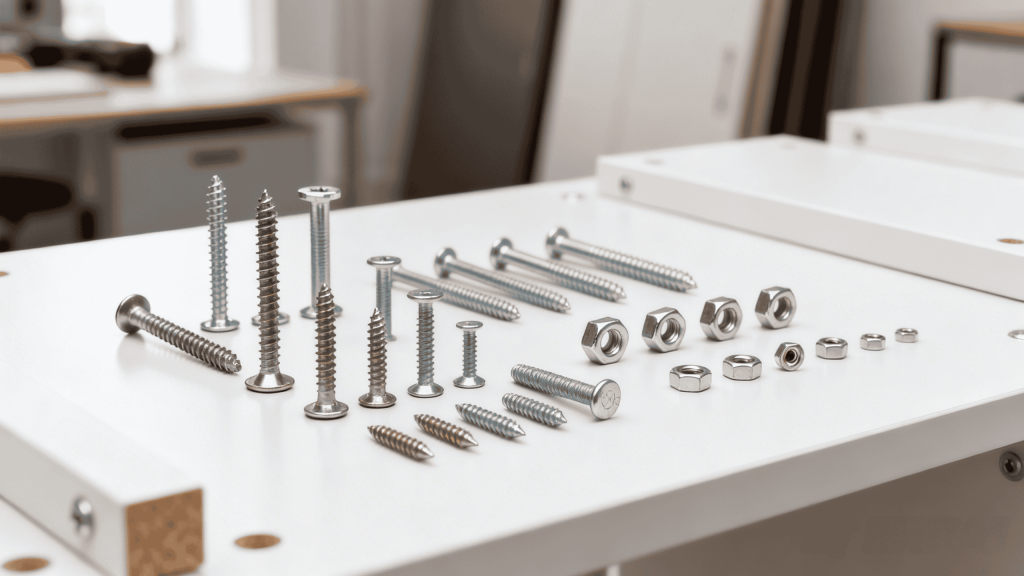
Furniture assembly relies on threaded fasteners more than any other joining method. Understanding the differences between metric, imperial, and specialized thread systems is crucial for successful furniture manufacturing, assembly, and repair. This comprehensive guide covers global threading standards, compatibility issues, and practical selection criteria.
Basic Thread Terminology and Geometry
Key Thread Parameters
All threaded fasteners share common dimensional characteristics that determine their function and compatibility:
| Parameter | Symbol | Definition | Importance |
|---|---|---|---|
| Major Diameter | D | Largest diameter of thread | Determines bolt size designation |
| Pitch | P | Distance between thread peaks | Determines thread coarseness |
| Thread Angle | α | Angle between thread flanks | Affects strength and friction |
| Lead | L | Distance advanced per revolution | Determines assembly speed |
Thread Form Profiles
Different thread forms serve specific functional requirements:
- ISO Metric (M): 60° thread angle, rounded roots and crests
- Unified (UNC/UNF): 60° thread angle, flat roots and crests
- Whitworth (BSW): 55° thread angle, rounded roots and crests
- Buttress: Asymmetric profile for heavy axial loads
- Acme: Trapezoidal profile for power transmission
Global Thread Standard Systems
ISO Metric Thread System (M)
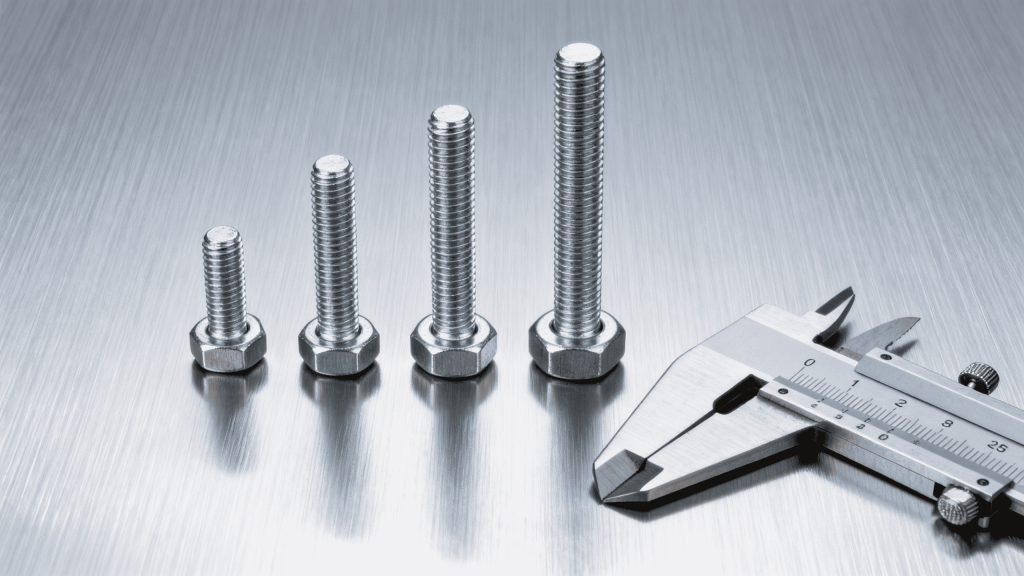
The ISO 68-1 standard defines metric thread specifications used worldwide. Metric threads are designated by the letter M followed by the nominal diameter in millimeters and pitch. For example, M6×1.0 indicates a 6mm diameter with 1.0mm pitch.
| Size | Pitch (mm) | Tapping Drill (mm) | Typical Use |
|---|---|---|---|
| M4 | 0.7 | 3.3 | Light fixtures, hardware |
| M6 | 1.0 | 5.0 | Furniture frames, brackets |
| M8 | 1.25 | 6.8 | Table bases, structural joints |
| M10 | 1.5 | 8.5 | Heavy-duty furniture, beds |
Unified Thread Standard (UNC/UNF)
Common in North America, unified threads follow ASME B1.1 specifications. UNC (Unified National Coarse) threads have larger pitches for quick assembly, while UNF (Unified National Fine) threads offer better vibration resistance.
| Size | Threads/inch | Tapping Drill (in) | Metric Equivalent |
|---|---|---|---|
| #8-32 | 32 | #29 (0.136) | M4×0.7 |
| 1/4″-20 | 20 | #7 (0.201) | M6×1.0 |
| 5/16″-18 | 18 | F (0.257) | M8×1.25 |
| 3/8″-16 | 16 | 5/16″ (0.3125) | M10×1.5 |
Specialized Furniture Threading Systems
Wood Thread Systems
Wood screws feature unique thread geometry optimized for fibrous materials:
- Coarse Pitch: Enhanced grip in wood fibers
- Sharp Threads: Reduced installation torque
- Deep Threads: Maximum holding power
- Tapered Tips: Self-starting capability
Machine Thread Inserts
Threaded inserts create durable female threads in wood and composite materials:
| Insert Type | Installation Method | Materials | Applications |
|---|---|---|---|
| Press-in Inserts | Press fit | Plastic, soft wood | Light-duty assemblies |
| Threaded Inserts | Threaded installation | Solid wood, MDF | Medium-duty furniture |
| Expansion Inserts | Expansion locking | Particle board, plywood | Heavy-duty applications |
| Ultrasonic Inserts | Ultrasonic welding | Thermoplastics | Modern furniture |
Thread Compatibility and Conversion
Metric vs Imperial Compatibility
While metric and imperial threads have similar 60° profiles, they are generally not interchangeable due to pitch differences. However, some sizes offer close approximations:
| Metric Size | Close Imperial Match | Diameter Difference | Pitch Difference |
|---|---|---|---|
| M6×1.0 | 1/4″-20 | 0.05mm | 0.27mm |
| M8×1.25 | 5/16″-18 | 0.11mm | 0.16mm |
| M10×1.5 | 3/8″-16 | 0.15mm | 0.30mm |
Cross-Threading Prevention
Proper assembly techniques prevent costly cross-threading damage:
- Start by Hand: Always begin threading manually
- Feel Resistance: Stop if abnormal resistance occurs
- Use Alignment Guides: Ensure perpendicular engagement
- Apply Steady Pressure: Avoid angled force application
Regional Standards and Manufacturing Practices
European Standards (DIN/EN)
European furniture manufacturers primarily follow DIN and EN standards:
- DIN 7991: Countersunk head screws
- DIN 912: Socket head cap screws
- EN 14399: High-strength structural bolts
- EN ISO 10666: Drive screws for wood
North American Practices
North American manufacturers utilize ANSI and ASTM standards:
- ANSI B18.6.1: Slotted and Phillips head screws
- ANSI B18.3: Socket head cap screws
- ASTM F1575: Wood screw specifications
- ASTM D1761: Mechanical fasteners in wood
Advanced Thread Technologies
Self-Tapping Threads
Self-tapping screws create their own mating threads, eliminating tapping operations:
| Type | Point Style | Materials | Applications |
|---|---|---|---|
| Type A | Gimlet point | Soft wood, plastic | General assembly |
| Type B | Blunt point | Hard wood, metal | Structural joints |
| Type C | Fluted point | Sheet metal | Hardware attachment |
Thread Locking Technologies
Various methods prevent unintended loosening of threaded connections:
- Chemical Locking: Thread-locking adhesives
- Mechanical Locking: Lock washers, nylon inserts
- Design Features: Prevailing torque, deformed threads
- Surface Treatments: Friction-increasing coatings